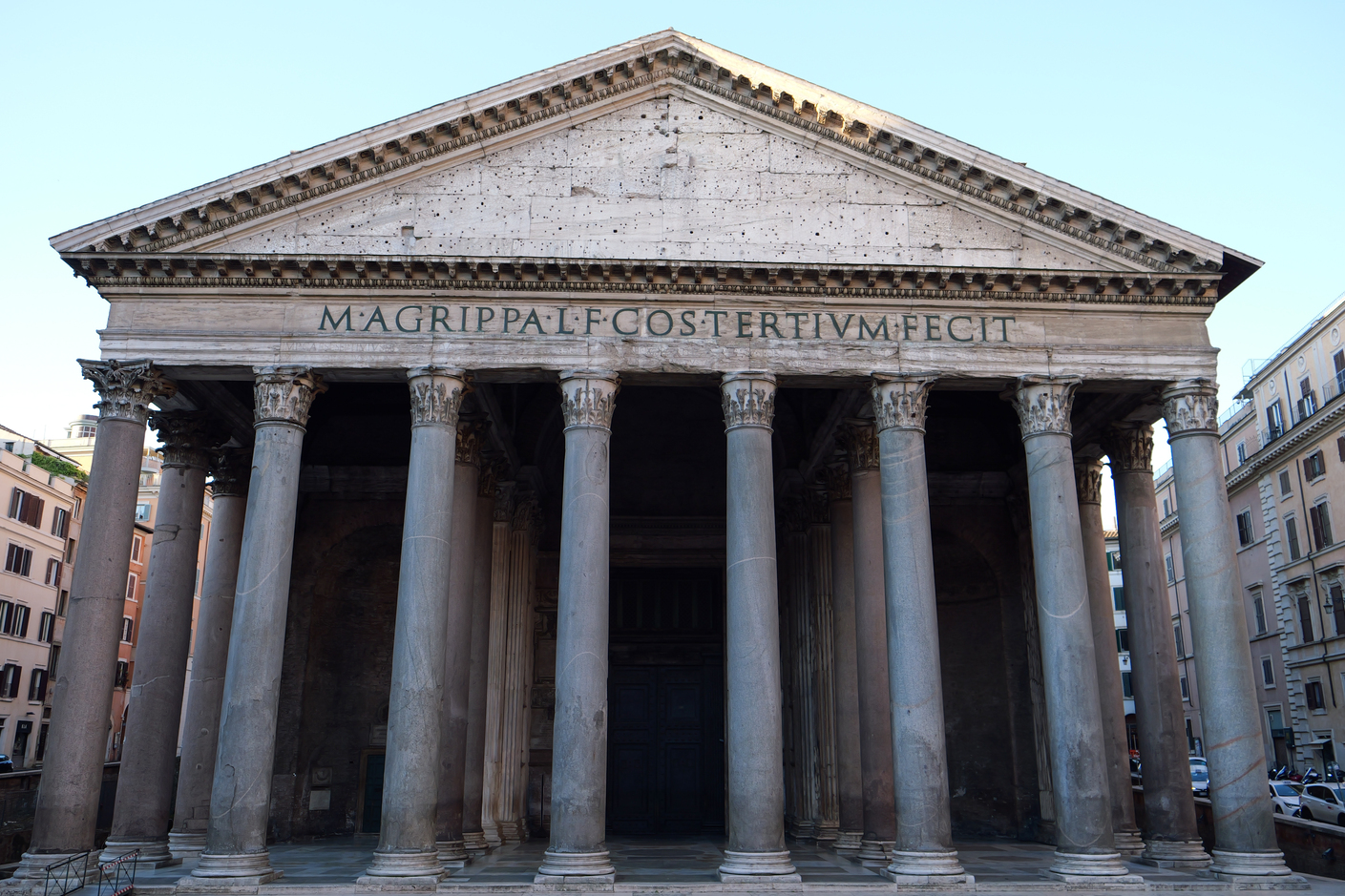
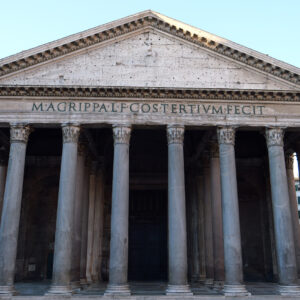
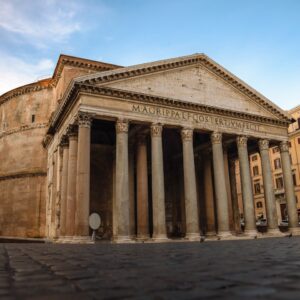
The Pantheon stands in the heart of Rome, in the Rione Pigna district, at the centre of the ancient Campus Martius. Its name, of Greek origin, retains a meaning that lies between two interpretations: ‘of all the gods’ or ‘entirely sacred’, both fitting for a place that embraces and unites heaven and earth.
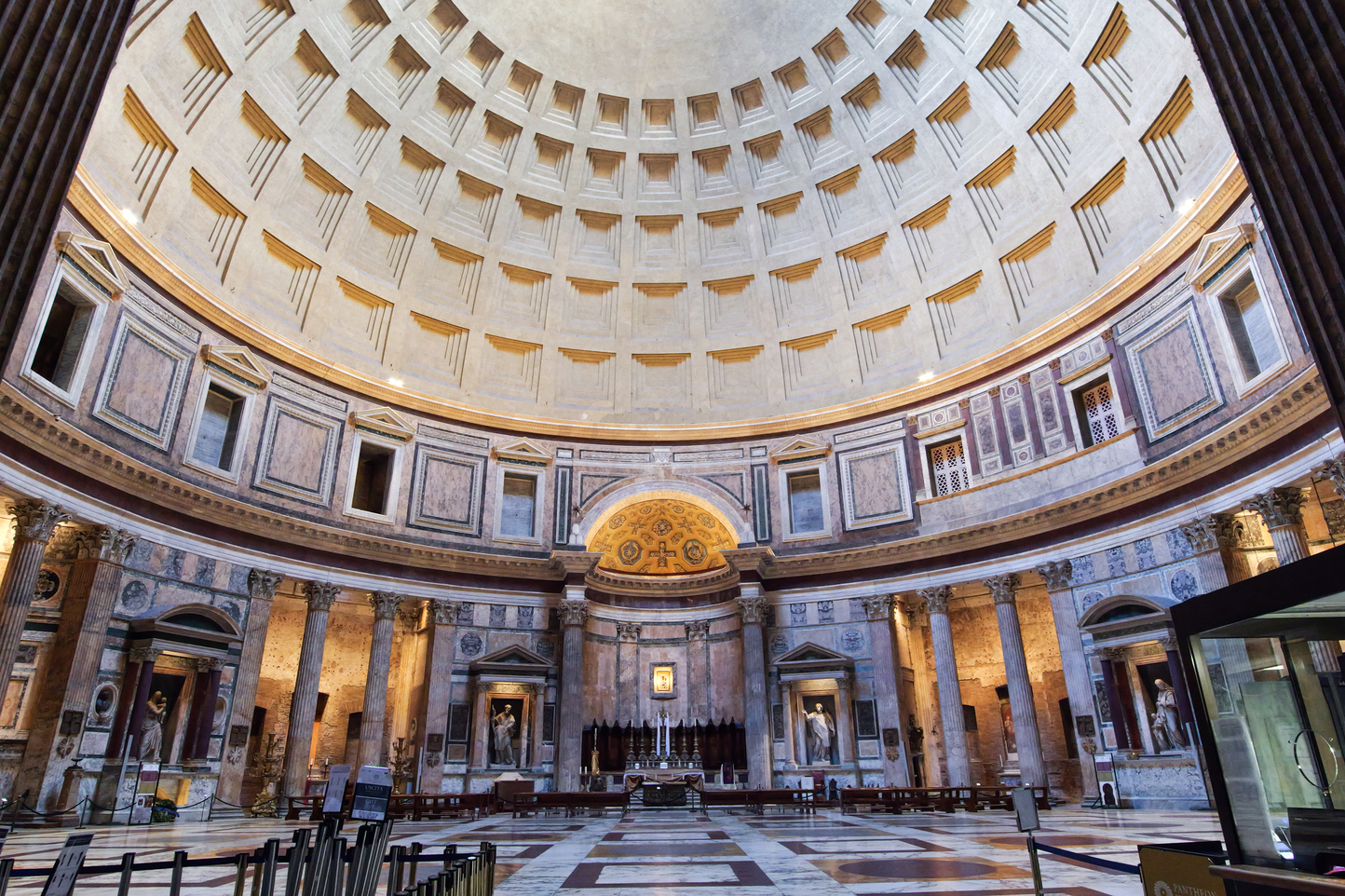
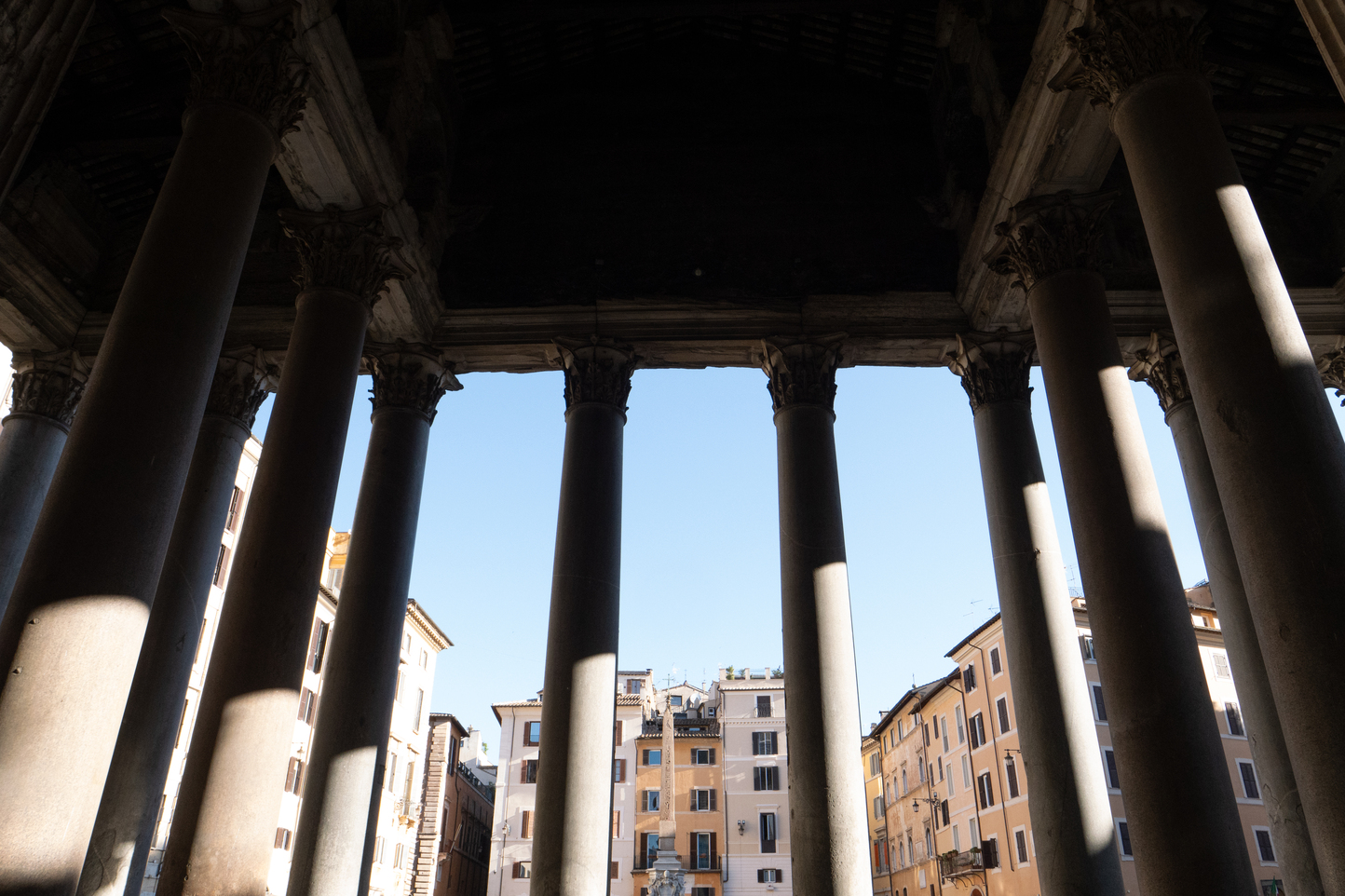
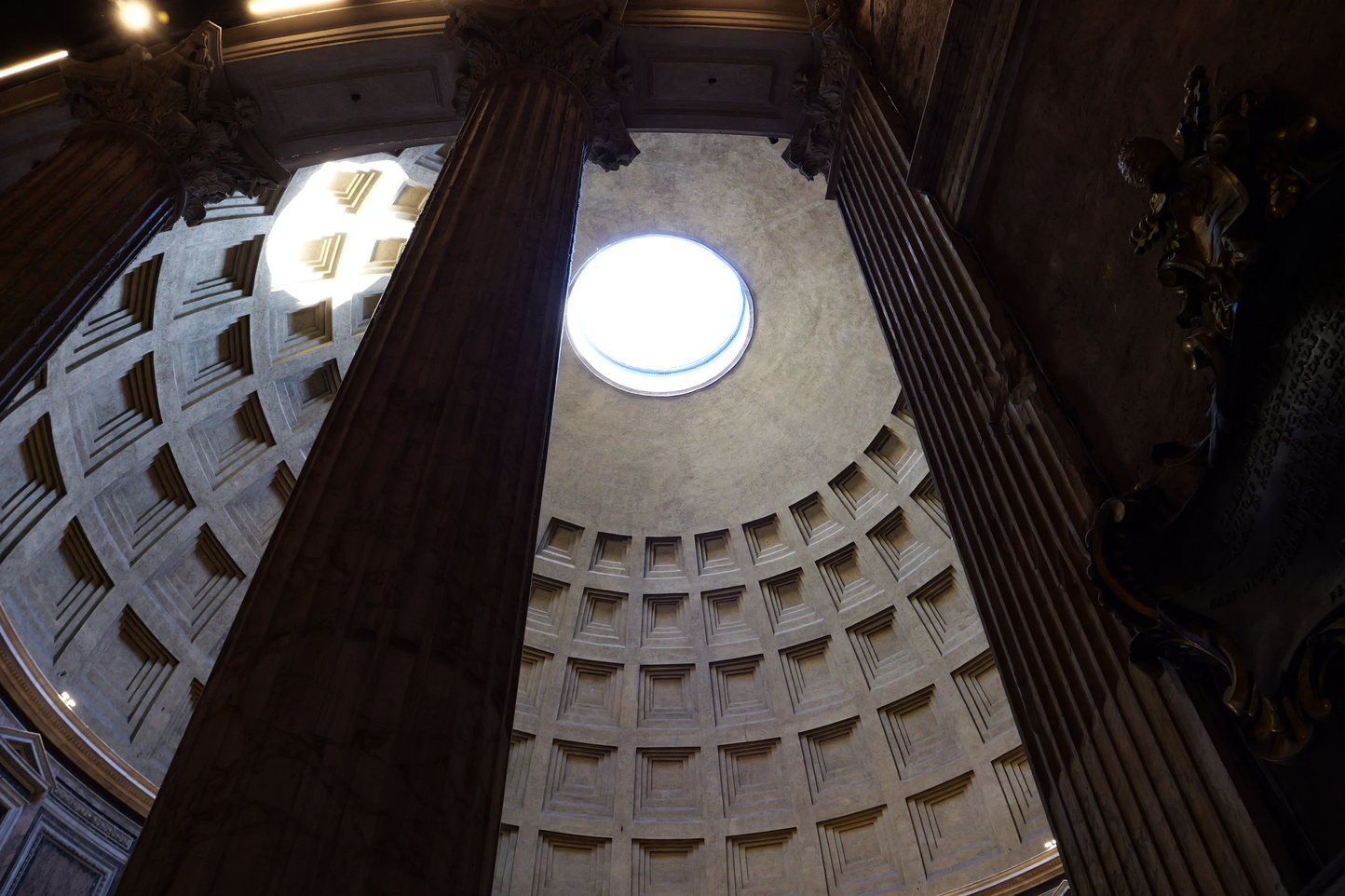
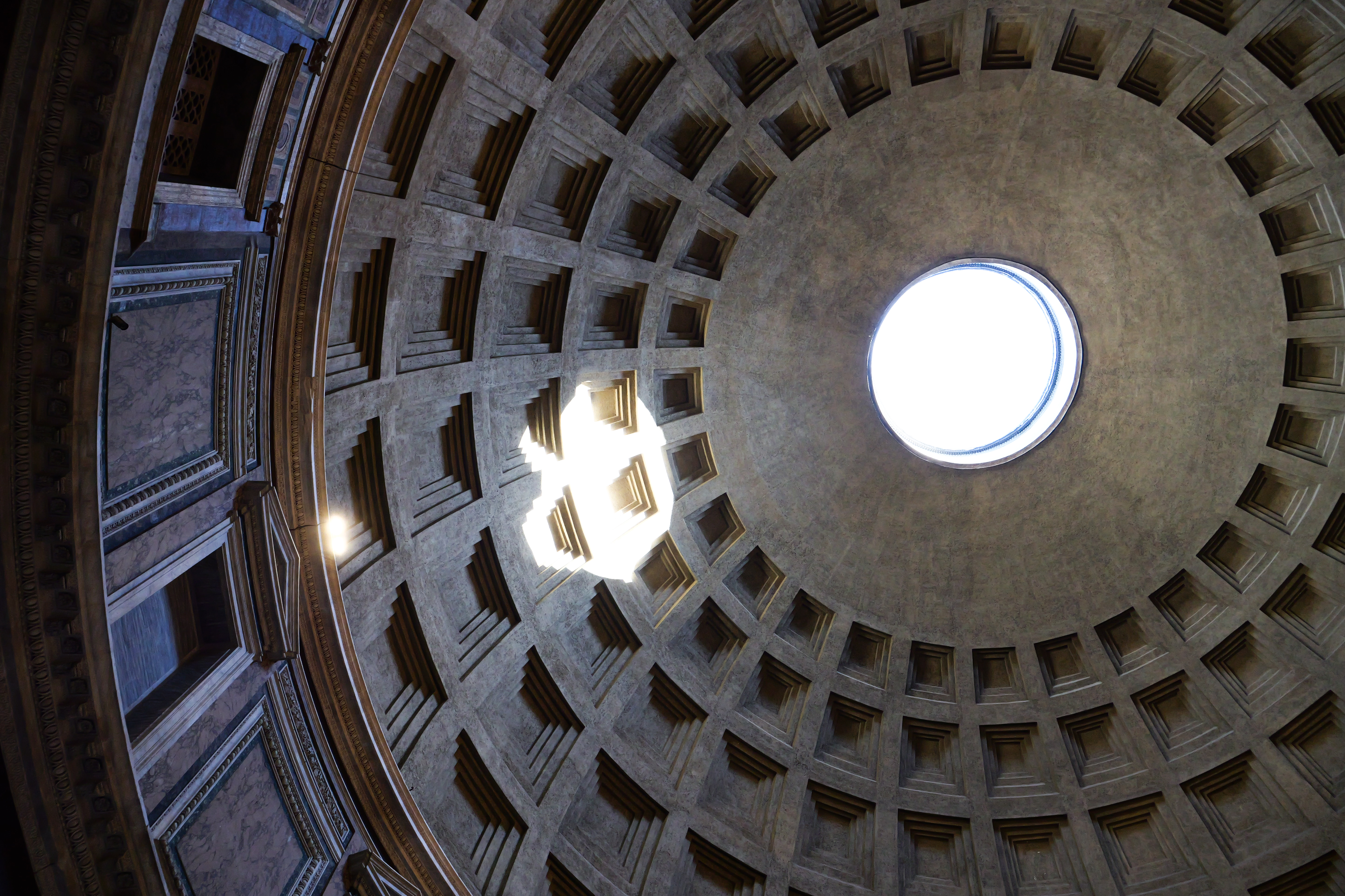
The present building was constructed between 118 and 128 AD under Emperor Hadrian, probably to a design by Apollodorus of Damascus, as a reconstruction of the temple commissioned by Agrippa in 27 BC. The structure combines a classical pronaos with Corinthian columns and a monumental rotunda covered by a perfect dome: 44 metres in diameter and 44 metres high. The dome is a masterpiece of Roman engineering: materials that become lighter towards the top, eight hollow pillars supporting the weight, 28 coffers that draw the eye towards the oculus, the sole source of light.
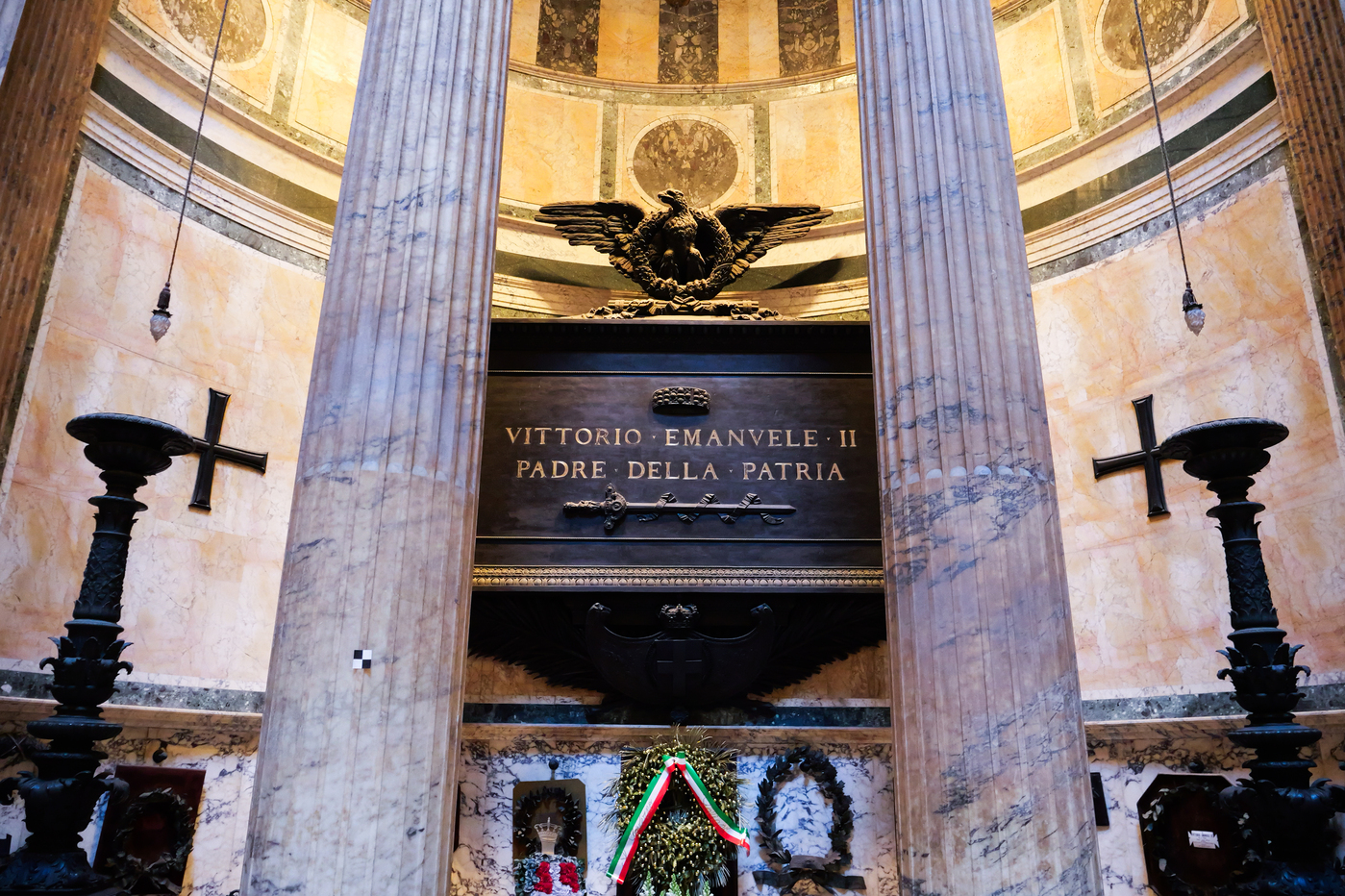
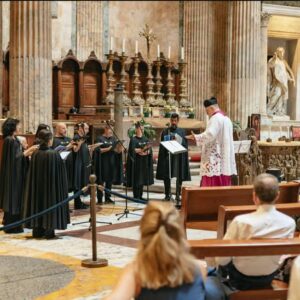
In 609, the Pantheon was donated to the Church of Rome and consecrated as Santa Maria ad Martyres. This new function has preserved it over the centuries, making it one of the best-preserved ancient buildings in the world. Inside are works and artefacts from different eras, including the Chapel of the Annunciation, with a fresco attributed to Melozzo da Forlì; the Chapel of Our Lady of Mercy, with exposed Hadrianic masonry; the icon of the Madonna Odigitria; the tomb of Raphael Sanzio; and the tombs of the kings of Italy: Victor Emmanuel II, Umberto I and Queen Margherita.
The Pantheon is a unique place: a building that inspired the Renaissance, a temple that became a basilica, a space where light, proportions and memory continue to speak with the same power as two thousand years ago, but also a cosmic calendar. On 21 April, Rome’s birthday, the sun strikes the portal; at Pentecost, a shower of petals falls from the oculus.