
If you have already visited the Colosseum, admired the Sistine Chapel and walked through Rome’s most famous squares, you may wonder what there is left to discover on a second trip. The answer lies not necessarily in travelling further from the historic centre, but in looking at the city differently: beyond Rome’s major landmarks, centuries of art, architecture and religious history can be found in quieter streets, neighbourhood churches and places that often go unnoticed during a first visit.
A second time in Rome offers the opportunity to slow down, explore places with a more personal connection to the city’s past and discover how ancient, medieval, Renaissance and Baroque Rome continue to coexist.
This two-day itinerary introduces a different side of the Eternal City, from the churches surrounding the Pantheon to the Viminale and Monti districts, where lesser-known buildings reveal stories that extend far beyond the familiar tourist routes.
Day 1: Rediscovering Rome’s historic centre beyond its famous squares
For the first day, begin in the area surrounding the Pantheon and explore a selection of churches that reveal different
aspects of Rome’s artistic and religious heritage.
The route crosses familiar parts of the historic centre, but the focus shifts from the city’s best-known monuments to buildings that deserve closer attention.
Start at the Pantheon with a different perspective
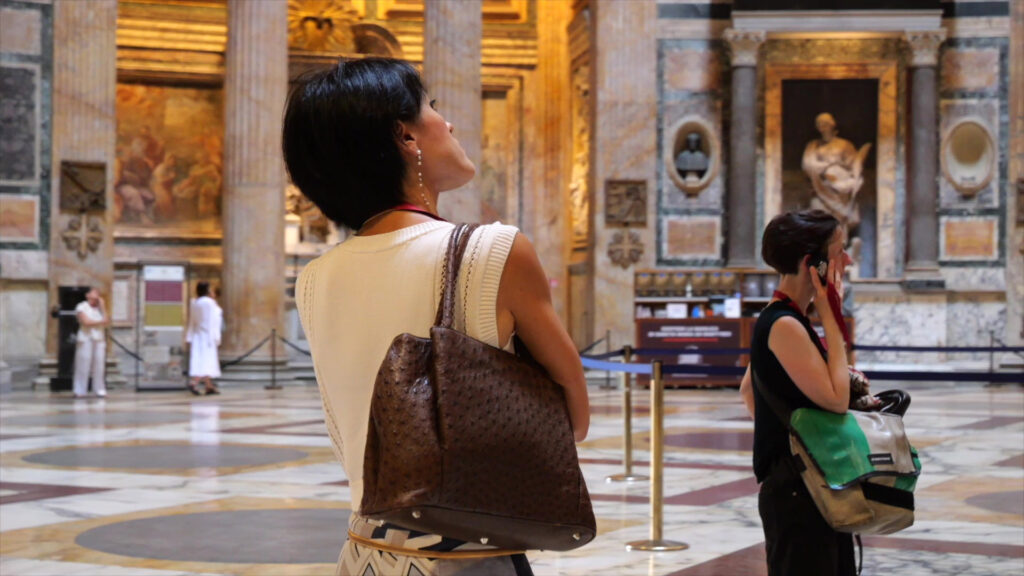
You may have visited the Pantheon during your first trip to Rome. Yet returning to a familiar place can reveal details that were easy to overlook.
Its history, however, extends beyond ancient architecture.
In 609, the Roman building was consecrated as a Christian church under the name of Santa Maria ad Martyres. This transformation contributed to its preservation and established a religious function that continues today.
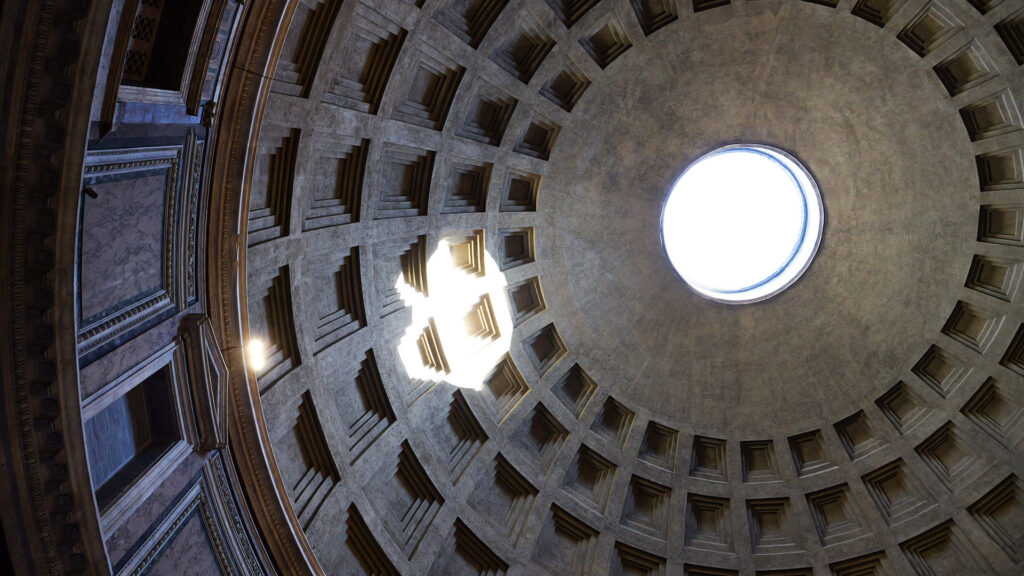
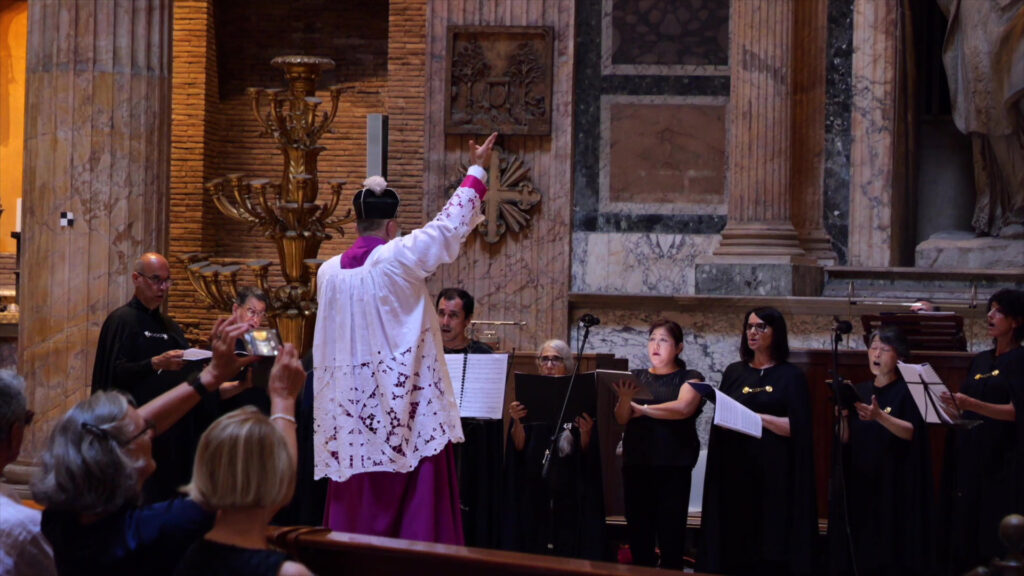
On a second visit, look beyond the dome and consider the chapels, sacred images and tombs around the Rotunda. The burial place of Raphael, the tombs of Italy’s monarchs and the continuing liturgical life of the Basilica reveal how different periods of history have become part of the same building.
The Pantheon is therefore not simply an ancient monument that survived. It is a place where Roman architecture and Christian tradition have remained connected for more than fourteen centuries.
ENTRANCE TICKET WITH WEB APP
Purchase your admission ticket and plan your visit independently.
Cost: €11.50
PANTHEON AFTER HOURS
Live the exclusive experience of visiting the Pantheon behind closed doors.
Starting from €27.00
ENTRANCE WITH GUIDED TOUR
Discover our guided tours of the Pantheon in Rome
Starting from €35.00
Sant’Andrea della Valle: discovering the art of the Roman Baroque
A short walk from the Pantheon, along Corso Vittorio Emanuele II, leads to Sant’Andrea della Valle. The Basilica is one of the significant churches of Baroque Rome, a period in which architecture, painting and sculpture were brought together to create richly articulated religious interiors.
Its great dome, decorated by Giovanni Lanfranco, dominates the interior, while paintings by Domenichino contribute to the artistic programme surrounding it.
Unlike the Pantheon’s ancient dome, whose geometry and open oculus define the space, Sant’Andrea della Valle uses painted decoration to transform the ceiling into an elaborate religious composition.
Santi XII Apostoli: art and devotion near Piazza Venezia
Continue towards Piazza Venezia and the Basilica of Santi XII Apostoli, dedicated to the Apostles of Christ. The church has origins dating back to the sixth century, although its present appearance reflects later transformations, particularly those of the Baroque period.
Inside, the decoration includes works associated with important figures in Roman art, including Giovanni Battista Gaulli, known as Baciccio, and the sculptor Antonio Canova.
One of the most significant works is Canova’s funerary monument to Pope Clement XIV, an example of the transition towards Neoclassical sculpture.
The Basilica also preserves an important connection with Renaissance painting through the Bessarion Chapel, whose frescoes are associated with Antoniazzo Romano and Melozzo da Forlì. Access to this historic space may be subject to special visiting arrangements

Santi XII Apostoli is particularly interesting because it brings together different artistic periods within a church that continues to serve a religious community.
Its architecture and works of art are not isolated museum pieces, but elements of a building shaped by centuries of devotion, patronage and change.
Santa Maria in Trivio: a quieter place near the Trevi Fountain
From Piazza Venezia, continue towards the Trevi district. The Trevi Fountain may already be familiar from your first visit, but the surrounding streets offer opportunities to discover smaller places of historical and religious interest.
Among them is Santa Maria in Trivio, a church whose relatively modest exterior contrasts with its richly decorated interior.
The building underwent important transformations during the late Renaissance, while its painted decoration reflects later developments in Roman sacred art.
The church is also associated with Saint Gaspar del Bufalo, founder of the Missionaries of the Precious Blood, whose tomb is preserved here.
This connection gives Santa Maria in Trivio a devotional significance that extends beyond its architectural and artistic features.
Stepping inside offers an opportunity to encounter a quieter dimension of the city, even while remaining close to one of Rome’s busiest areas.
End the day by exploring the smaller streets around the Trevi district, taking time to notice how churches, historic residences and public spaces form part of the same urban landscape.
Day 2: Early Christianity, ancient Rome and quiet corners of Monti
The second day explores the area between the Viminale hill and the Monti district.
Although these neighbourhoods are not far from the Colosseum or Termini station, they offer a different perspective on Rome’s history.
Here, ancient Roman structures have been incorporated into later religious buildings, early Christian mosaics preserve some of the city’s oldest sacred imagery, and centuries of devotion remain visible in places that are often absent from conventional sightseeing itineraries.
- Begin near Piazza della Repubblica, where the remains of the Baths of Diocletian recall one of the great public complexes of imperial Rome. Close to the ancient baths stands San Bernardo alle Terme, a church created within one of the circular structures belonging to the Roman complex.
Its form has often invited comparisons with the Pantheon. Both buildings are organised around a circular interior crowned by a dome, although their dimensions, decoration and historical development differ considerably. For visitors returning to Rome, it is also an opportunity to compare two buildings that share architectural features while belonging to different moments in the city’s history. - Continue towards Via Urbana, where the Basilica of Santa Pudenziana preserves an important testimony to early Christianity in Rome. According to Christian tradition, the site is connected with the family of the Roman senator Pudens and with the early presence of Saint Peter in the city.
The most significant artistic feature is the mosaic in the apse, generally dated to the late fourth or early fifth century. It depicts Christ enthroned among the Apostles, in a composition that combines elements of Roman imperial imagery with Christian religious meaning. The figures, architecture and symbolic details offer a remarkable example of the artistic language developed by the early Christian community. - From Santa Pudenziana, continue towards Monti, one of Rome’s historic neighbourhoods, where narrow streets and changing elevations reveal a more intimate urban landscape. Along Via Panisperna stands the church of San Lorenzo in Panisperna, traditionally associated with the martyrdom of Saint Lawrence, a deacon of the Roman Church who died during the persecutions of the third century.
Inside, the large painting of the Martyrdom of Saint Lawrence by Pasquale Cati, completed in the late sixteenth century, draws attention to the saint’s story. The work connects the church’s artistic heritage with its religious dedication and the memory of one of Rome’s most venerated early Christian martyrs.
After visiting the church, take time to walk through Monti, observing its smaller squares, historic streets and the relationship between everyday life and the city’s architectural heritage. It is an appropriate place to end a weekend devoted to discovering Rome beyond its most familiar landmarks.
Discover a different side of Rome with Oltre la Soglia
Rome’s cultural heritage extends far beyond its most celebrated monuments.
The churches encountered during this weekend itinerary reveal different chapters of the city’s history: ancient Roman architecture transformed for Christian worship, early medieval and Renaissance traditions, Baroque artistic programmes and places of devotion that continue to welcome communities today.
Through Oltre la Soglia, visitors can discover a network of historic churches and explore their artistic, cultural and spiritual significance through dedicated experiences and digital content.
Whether you are returning to Rome for a weekend or simply looking for a different way to explore the city, these places offer an opportunity to move beyond the familiar itinerary. A second visit is not only about seeing something new. It can also mean learning to recognise the history, art and living traditions that have always been part of Rome, just beyond the places you already know.
You might also like
All articles ↗
Not all of Rome’s hidden churches are found far from the historic centre. Some stand just steps away from…
Read article →
Visiting the Pantheon in Rome is not only about discovering its ancient architecture, monumental dome and famous oculus. Throughout…
Read article →
A Pantheon guided tour offers an opportunity to explore one of Rome’s most important historic buildings with a deeper…
Read article →