
Rome offers far more than visits to its most famous monuments. Beyond the Colosseum, the Vatican Museums and the city’s celebrated squares, there are countless opportunities to explore its cultural heritage through guided experiences, special openings, exhibitions, concerts and historic places that reveal different chapters of its past.
Some of the most rewarding cultural experiences in Rome take place in familiar buildings seen from a new perspective. Others lead visitors towards smaller museums, ancient churches or spaces that are not always accessible during regular opening hours.
Whether you are visiting Rome for the first time or returning to discover another side of the city, exploring its cultural activities offers a way to connect more closely with its art, history and traditions.
Special visits in Rome: discovering familiar places differently
A guided visit can change the way we experience even the most recognisable places.
Rome’s historic buildings often contain centuries of transformations that are not immediately apparent.
Exploring the Pantheon beyond its ancient architecture
The Basilica di Santa Maria ad Martyres – Pantheon offers a clear example of how a familiar monument can be approached from different perspectives.
Most visitors know the Pantheon for its monumental dome, circular interior and central oculus, one of the defining features of ancient Roman architecture. Yet the building’s history extends well beyond its original construction. In 609, the Pantheon was
consecrated as a Christian church, beginning a religious function that continues today.
Its interior brings together different periods of Roman history, from ancient architectural elements to Christian chapels, sacred images and the tombs of artists and Italian monarchs. A visit focused on these transformations reveals how the Pantheon has remained part of the city’s life for nearly two thousand years.
With Oltre la Soglia, visitors can explore the Basilica through digital interpretive content designed to connect its architecture, artistic heritage and spiritual significance.
The experience encourages a closer reading of the building, allowing visitors to move beyond its most recognisable features and discover the histories preserved within the Rotunda.
Cultural events and special openings in Rome
Some of Rome’s most interesting cultural opportunities take place outside the usual museum and monument visiting schedules. Throughout the year, public institutions and cultural organisations promote special openings, evening visits and events that provide access to historic places under different conditions.
These initiatives may include guided tours of archaeological sites, visits to spaces with restricted access, temporary exhibitions or events organised around particular cultural celebrations.
Special openings are particularly interesting because they often reveal aspects of familiar places that cannot be experienced during an ordinary visit.
Sacred art and historic churches: another cultural side of Rome
Among the many cultural things to do in Rome, exploring its historic churches offers a particularly meaningful perspective on the city’s heritage. For centuries, churches have played an important role in the development of Roman art and architecture.
Artists, architects and patrons contributed to buildings intended for religious worship, creating works that remain central to the history of European art.
Unlike many museum collections, however, these works are often preserved within the spaces for which they were originally created. Altarpieces, frescoes, mosaics and sculptures continue to exist alongside chapels, altars and religious traditions.
Sant’Andrea della Valle: experiencing Baroque art through architecture
The Basilica of Sant’Andrea della Valle is one of the significant examples of Baroque religious architecture in Rome.
Its great dome, decorated by Giovanni Lanfranco, rises above an interior where architecture and painting work together to shape the visitor’s perception of space.
The frescoes transform the dome into a vast painted composition, while other decorations contribute to the religious and artistic programme of the Basilica.
Observing these works in their original setting helps explain the distinctive language of Roman Baroque art

Santa Pudenziana: discovering the art of early Christian Rome
For those interested in earlier periods, the Basilica of Santa Pudenziana offers a different cultural experience. Located near the Viminale hill, the church preserves one of Rome’s most important early Christian mosaics.
The decoration of the apse, generally dated to the late fourth or early fifth century, depicts Christ enthroned among the Apostles.
Its composition reflects visual traditions inherited from Roman imperial art while expressing the religious identity of the early Christian community.
The mosaic is especially significant because it reveals how artistic forms associated with ancient Rome were adapted to communicate Christian subjects.
A visit to Santa Pudenziana therefore provides an opportunity to explore the transition between the Roman world and the development of Christian Rome

Sacred music and cultural performances in historic settings
Music is another important part of Rome’s cultural heritage. The city has a long tradition of sacred music, opera and instrumental performance, with historic churches and other cultural venues continuing to provide settings for concerts and special events.
Listening to music within a historic building can offer a way to experience its architecture that differs from a conventional visit. The relationship between sound and space becomes part of the encounter, especially in churches where music has traditionally accompanied religious celebrations
Among the experiences developed by Oltre la Soglia is Pantheon After Hours, a programme designed to combine cultural discovery with sacred music.
The experience brings together a visit to the Basilica through a multilingual audio guide and a live musical performance beneath the dome.
Visitors can first explore the history and artistic heritage of the Pantheon before experiencing its interior through music.
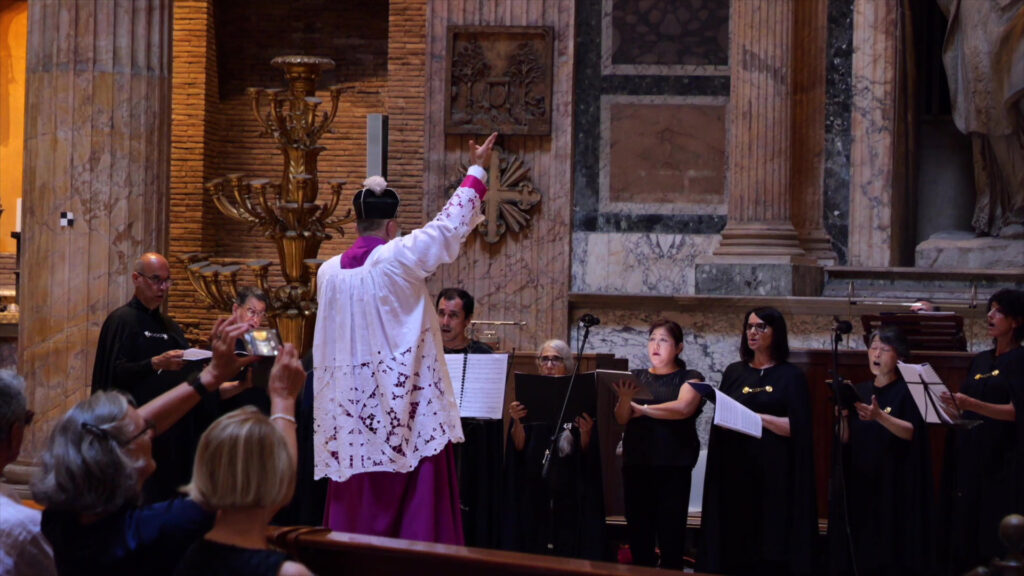
PANTHEON AFTER HOURS
Live the exclusive experience of visiting the Pantheon behind closed doors.
Starting from €27.00
Discover Rome’s cultural and spiritual heritage with Oltre la Soglia
Rome’s cultural identity has been shaped not only by emperors, artists and architects, but also by the religious communities that have occupied and cared for many of its historic buildings over the centuries.
Churches and basilicas preserve some of the city’s most significant artistic achievements, while continuing to serve as places of worship, memory and reflection.
Through Oltre la Soglia, visitors can discover this dimension of Rome’s heritage through experiences and interpretive content that connect art, history, architecture and spirituality.
Whether through a special event, a musical performance or a self-guided visit, discovering Rome’s cultural heritage means recognising the connections between the works of art, the buildings that preserve them and the communities that continue to give them meaning.
You might also like
All articles ↗
If you have already visited the Colosseum, admired the Sistine Chapel and walked through Rome’s most famous squares, you…
Read article →
Not all of Rome’s hidden churches are found far from the historic centre. Some stand just steps away from…
Read article →
Visiting the Pantheon in Rome is not only about discovering its ancient architecture, monumental dome and famous oculus. Throughout…
Read article →