
Small pieces of stone, glass and gold come together to form images that have survived for centuries. The mosaics in Rome’s churches are among the most important examples of Christian art, depicting biblical scenes, Christ, the Virgin Mary and the saints, while preserving the memory of the communities that commissioned them.
From the early Christian mosaics of Santa Pudenziana to the great medieval decorations, these works reveal the evolution of Rome’s artistic and religious traditions. They are not simply images to admire, but an integral part of buildings that remain active places of worship.
Mosaic art in Rome’s churches
Mosaic is an artistic technique that uses small pieces of different materials, known as tesserae, to create figures, geometric patterns and decorative compositions. Already widespread in ancient Rome, it was later adopted in early Christian basilicas, particularly to decorate apses, arches and walls.
Unlike painting, mosaic interacts with light through the properties of its materials: gold tesserae reflect light differently depending on the viewer’s position, while coloured pieces create figures, landscapes and narrative scenes.
In Christian churches, these images also served a religious purpose, representing biblical stories, sacred figures and aspects of the faith while accompanying prayer and worship.
Early Christian mosaics: the first great images of Christian Rome
Between the fourth and fifth centuries, as Christianity spread and the first monumental basilicas were built, mosaics became one of the principal forms of religious decoration.
Santa Pudenziana: Christ enthroned among the Apostles
Among the early Christian mosaics in Rome, the apse decoration of the Basilica of Santa Pudenziana holds particular importance. Dating from the late fourth or early fifth century, it is one of the oldest surviving Christian apse mosaics in the city.
At the centre of the composition, Christ sits on a throne surrounded by the Apostles. Wearing garments that recall Roman imperial traditions, he holds an open book. Behind him, an elaborate architectural setting is dominated by a large jewelled cross and the symbols of the four Evangelists.
Two female figures offer crowns to the Apostles Peter and Paul. Their identity remains debated: they may represent Saints Pudenziana and Prassede or personifications of the Church emerging from Jewish and Gentile communities.

The mosaic illustrates how early Christian art adopted forms inherited from Roman culture and gave them new religious meanings.
Santa Maria Maggiore: fifth-century biblical narratives
The Basilica of Santa Maria Maggiore preserves an important cycle of early Christian mosaics created during the pontificate of Pope Sixtus III, between 432 and 440.
Along the central nave, panels depict episodes from the Old Testament, while the triumphal arch presents scenes associated with the infancy of Jesus.
Unlike the monumental composition at Santa Pudenziana, these mosaics develop through a sequence of images that guides viewers through biblical history.
The cycle demonstrates the growing importance of visual storytelling in Christian churches during the fifth century.
Medieval mosaics: golden light and religious symbolism
During the Middle Ages, mosaic art continued to develop in Roman churches, increasingly emphasising symbolic representations of sacred space.
Gold backgrounds, solemn figures and compositions centred on Christ or the Virgin Mary became characteristic features of some of the period’s most important works.
Santa Prassede: ninth-century mosaics
The Basilica of Santa Prassede, rebuilt under Pope Paschal I in the ninth century, preserves an important collection of medieval mosaics in Rome.
In the apse, Christ appears accompanied by saints and Pope Paschal I, who commissioned the decoration. The arches contain compositions inspired by visions from the Book of Revelation. Particularly significant is the Chapel of San Zeno, whose walls and vault are covered with golden mosaics. At the centre of the vault, Christ appears inside a medallion supported by four angels.
Santa Prassede also shares a religious connection with Santa Pudenziana, as the two saints are traditionally regarded as sisters.
San Clemente: the medieval mosaic of the Triumph of the Cross
In the Basilica of San Clemente, the great twelfth-century apse mosaic depicts the Triumph of the Cross. At the centre is the crucified Christ, while branches and vines extend from the Cross across the composition, surrounded by human figures, animals and other symbolic elements.
The Cross becomes the centre of an image associated with life and salvation, where the vegetation takes on religious significance.
The mosaic demonstrates how medieval artists combined narrative, symbolism and architectural space within a single composition.
Santa Maria Maggiore: the Coronation of the Virgin
The history of mosaic art at Santa Maria Maggiore continued into the Middle Ages.
At the end of the thirteenth century, Jacopo Torriti created the apse mosaic commissioned during the pontificate of Pope Nicholas IV.
The central scene depicts the Coronation of the Virgin, surrounded by angels and saints. Below, episodes from Mary’s life include the Annunciation and the Adoration of the Magi.
Comparing the early Christian mosaics of the nave with the medieval decoration of the apse reveals how mosaic art evolved across almost nine centuries within the same Basilica.
Beyond figurative mosaics: ancient floors and marble decoration
Alongside mosaics depicting religious figures and biblical scenes, Rome also preserves ancient floors decorated with materials of different shapes and colours

In the Basilica di Santa Maria ad Martyres – Pantheon, the polychrome marble pavement retains a geometric design of Roman origin, based on alternating circles and squares. This is a form of marble inlay, distinct from figurative mosaics created with small tesserae.
Beneath the Basilica of San Lorenzo in Lucina, archaeological investigations have revealed ancient black-and-white mosaic floors belonging to Roman structures that existed before the church. Access to these underground remains must be checked separately from ordinary visits to the Basilica

These examples show that Rome’s mosaic heritage extends beyond monumental wall decorations to the floors and ancient buildings upon which many churches were later constructed.
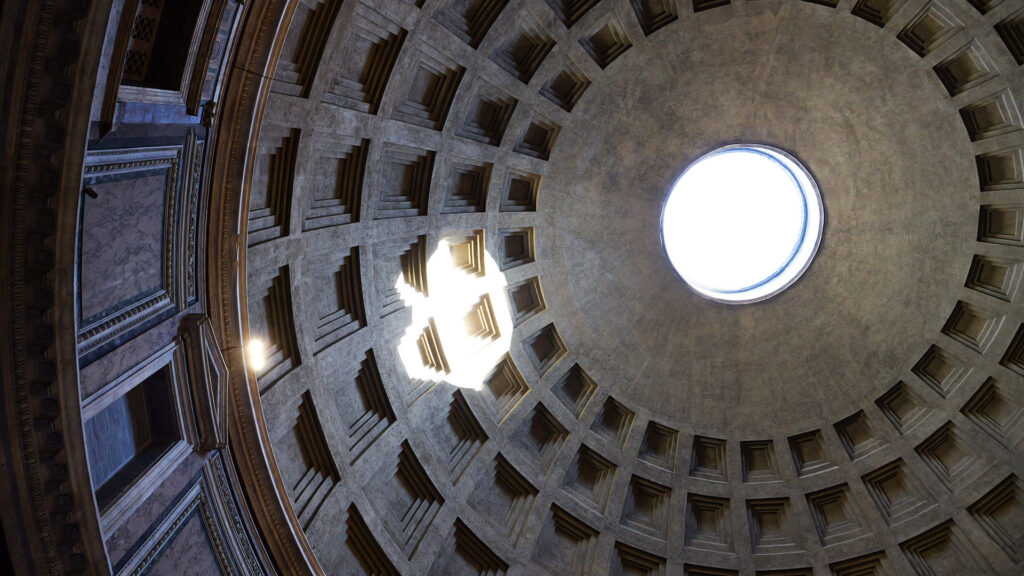
ENTRANCE TICKET WITH WEB APP
Purchase your admission ticket and plan your visit independently.
Cost: €11.50
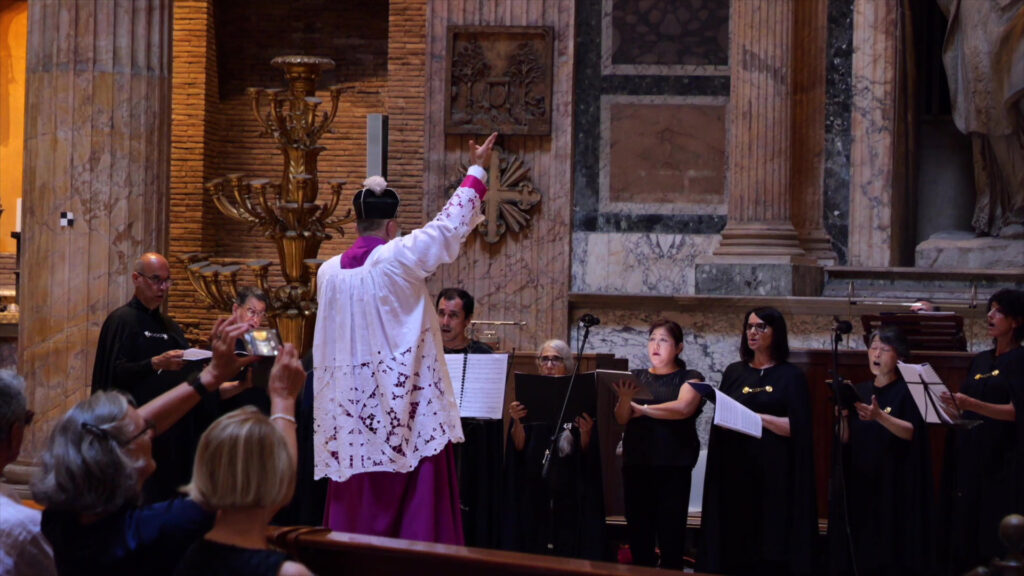
PANTHEON AFTER HOURS
Live the exclusive experience of visiting the Pantheon behind closed doors.
Starting from €27.00
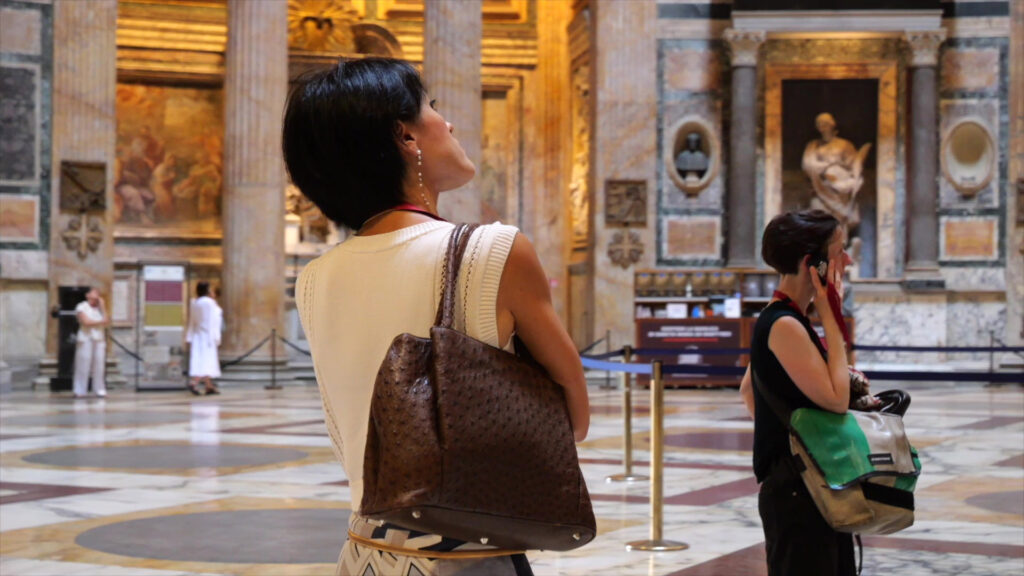
ENTRANCE WITH GUIDED TOUR
Discover our guided tours of the Pantheon in Rome
Starting from €35.00
Discover Rome’s church mosaics with Oltre la Soglia
The mosaics preserved in Rome’s churches tell the story of the transition from ancient Roman art to Christian imagery, the development of new artistic traditions and the role of basilicas in the city’s religious life.
The apse mosaic of Santa Pudenziana is particularly significant in understanding this history. It preserves an artistic testimony to Rome’s early Christian communities within a church that remains an active place of worship.
Through Oltre la Soglia, visitors can explore the history of Santa Pudenziana, discover its artistic heritage and continue exploring other churches in the project, where art and spirituality remain connected across the centuries.
You might also like
All articles ↗
If you have already visited the Colosseum, admired the Sistine Chapel and walked through Rome’s most famous squares, you…
Read article →
Not all of Rome’s hidden churches are found far from the historic centre. Some stand just steps away from…
Read article →
Visiting the Pantheon in Rome is not only about discovering its ancient architecture, monumental dome and famous oculus. Throughout…
Read article →